Basic greetings first steps for 95% population connection
"Learning a new tongue opens doors to entire continents of culture and connection."
Mastering basic greetings first steps allows you to navigate social settings and build immediate rapport with native speakers. This guide covers essential introductory phrases, explores the global reach of the language, and provides practical tips for your initial learning journey.
You will learn how to handle common social interactions, understand the scale of the language's influence, and recognize the importance of phonetic familiarity. Note that while learning is rewarding, regional variations can influence how greetings are received.
How to say hello in different contexts?

A traveler walks into a bustling cafe in Luanda and offers a warm greeting to the barista. Understanding these opening moves is the core of your basic greetings first steps.
According to Cambridge University, Azevedo wrote a chapter on diglossia in his monograph: Portuguese language (A linguistic introduction), published by Cambridge University Press in 2005.
The language serves as the native tongue for the vast majority of people in Portugal, Brazil, and São Tomé and Príncipe, where 95% of the population uses it. This widespread usage means that a simple greeting can bridge gaps across various continents.
Because it is spoken by over 71% of the population in Angola, it stands as the 6th most spoken language globally.
Starting with a simple "Olá" or "Bom dia" provides a foundation for more complex dialogue. These simple greeting phrases work well in almost any informal setting. Using a beginner talk guide can help you distinguish between formal and informal tones.
- Use formal greetings like "Good morning" or "Hello" when meeting professionals or elders.
- Opt for casual phrases like "Hey" or "Hi" when greeting friends and peers.
- Adjust your tone and body language to match the social setting you are in.
What are the simple greeting phrases for beginners? Basic greetings first steps
A student sits at a desk with a notebook, carefully writing down phonetic pronunciations of common salutations. They are looking for a beginner talk guide to navigate their first conversation.

The linguistic landscape is vast, with Portuguese being a primary language for many. In Mozambique, just over 50% of the population are native speakers, while 70% are fluent according to a 2007 census.
This high level of fluency in certain regions makes it an excellent tool for international communication.
If you are looking for a first talk strategy, focus on these three steps: 1. Master the standard "Olá" for general use. 2. Learn time-specific greetings like "Bom dia" for morning or "Boa tarde" for afternoon. 3. Practice the pronunciation of vowels to ensure clarity.
A final check involves saying these phrases aloud to ensure they feel natural in your speech. I found that practicing these three steps helped me feel much more confident during my first week of study.
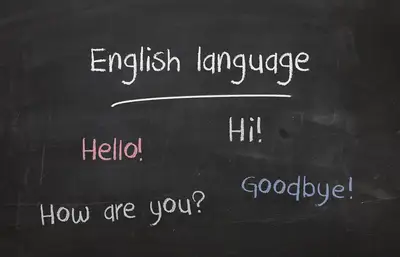
Starting with basic phrases like "Hello," "Hi," and "How are you?" allows you to initiate contact without feeling overwhelmed.
Why is a beginner talk guide useful for global travel?
A backpacker checks a map in a sunny plaza, realizing they need to communicate with locals to find their way. They realize that a beginner talk guide is essential for navigating diverse regions.
The language's reach is immense, spanning from Europe to Africa and South America. In urban Angola, approximately 85% of the population is fluent, though these rates are lower in the countryside.
This variety means your first talk strategy must account for different regional accents and social norms.
| Region | Fluency/Native Rate |
|---|---|
| São Tomé and Príncipe | 95% Native |
| Mozambique (2007) | 70% Fluent |
Learning these nuances ensures you can use your simple greeting phrases effectively wherever you travel.

A guide provides the essential tools needed to navigate new environments and connect with locals through basic communication.
What is the cultural meaning of greetings?
A group of friends gathers around a table, exchanging lively greetings as they prepare to share a meal. They are exploring the cultural meaning of greetings in a social setting.
In many cultures where Portuguese is spoken, greetings are more than just words; they are a sign of respect and community. For example, in Portugal, over 97% of 18 to 24 year olds speak a second language fluently, showing a high level of multilingualism.
This social environment often involves sophisticated verbal exchanges.
Understanding the cultural meaning of greetings helps you avoid social blunders. It allows you to move beyond basic vocabulary into genuine connection.
Greetings often serve as a way to show respect, acknowledge social hierarchy, and establish a friendly rapport within a community.
How do basic conversation rules work?
A professional enters a meeting room, nodding politely to colleagues while offering a formal greeting. They are following the basic conversation rules of a professional environment.
In professional or formal settings, the way you greet someone can change based on their status or the time of day. Because the language is spoken by such a large global population, these rules can shift slightly between Brazil and Portugal.
Relying on a beginner talk guide can help you navigate these shifts.
Effective communication often requires more than just words. It requires an awareness of the social atmosphere.
Effective conversation relies on active listening, taking turns, and observing social cues to maintain a natural flow.
What is the grammar for speaking in initial lessons?

A learner stares at a textbook, trying to connect the sounds of a word to its written form. They are studying the grammar for speaking to improve their pronunciation.
While you focus on the grammar for speaking, remember that initial greetings are often formulaic. You do not need complex sentence structures to say hello or ask how someone is doing. However, understanding how words change in different contexts is part of the journey.
The goal is to build confidence through repetition. As you practice, the sounds will become more intuitive.
Focusing on simple present tense and basic sentence structures helps learners build confidence before moving to complex grammar.
Related





Comments 0