Korean particle of possession: Why it shifts meaning
"The nuances of a single particle can shift the entire weight of a sentence, turning a simple ownership into a complex relationship."
Understanding the Korean particle of possession and its various roles is essential for any student looking to master natural sentence structures. This guide covers the different ways to use the particle, how it differs from other markers, and the specific grammatical shifts it causes.
Key takeaways include identifying possessive vs. descriptive uses, managing noun relationships, and recognizing when to omit the particle for natural flow.
How to identify the Korean particle of possession?
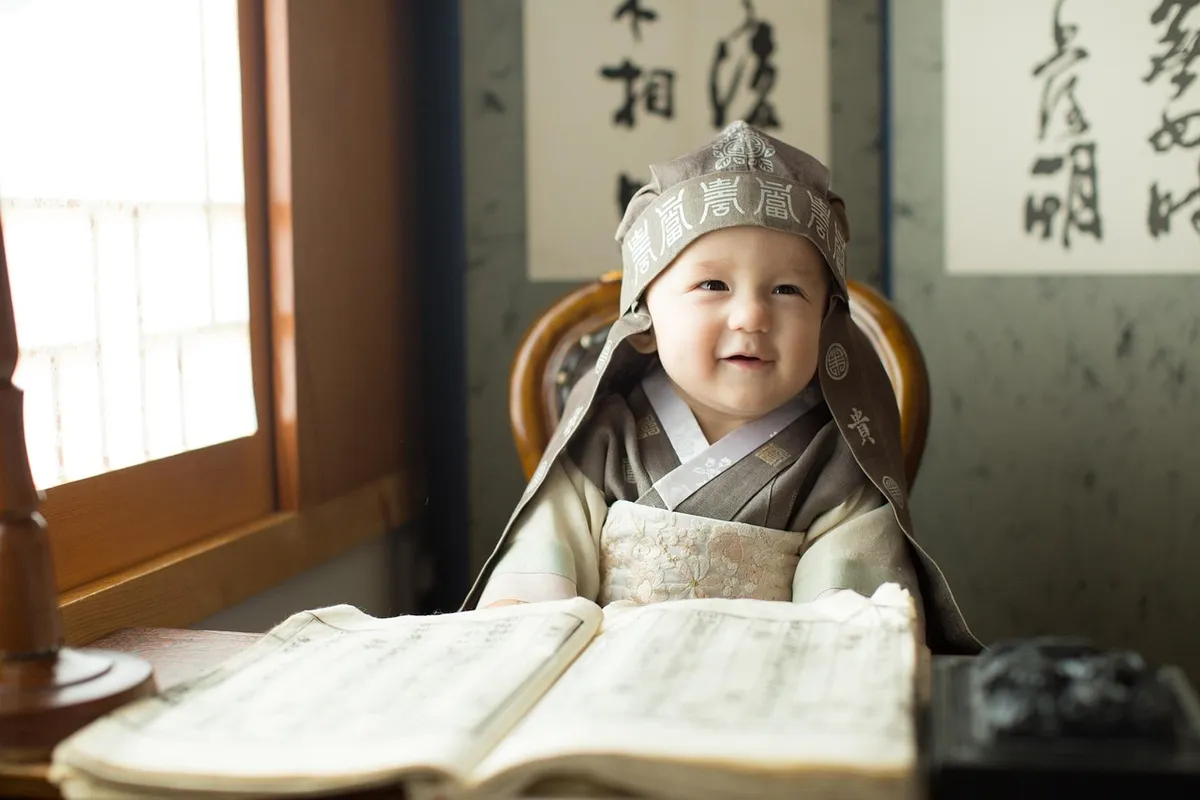
Late at night in the quiet library, I tap my pen against the desk while scanning the page to find the Korean particle of possession.
A student sits at a wooden desk, staring at a textbook filled with sentence diagrams and marking a single syllable. The Korean particle of possession often acts as a bridge between two nouns, much like the English word "of." It clarifies which noun belongs to or is related to another.
According to Sogang University, learners can explore the linguistic and philosophical origins of the Korean alphabet (Hangul) through their free online Korean language and culture course.
In its most basic form, the particle links a possessor to a possessed object. This is the primary way to express ownership in a direct sense. For example, when you want to say "the student's book," you use this particle to tie the person to the object.
It establishes a clear hierarchy between the two nouns in the sentence.
The Korean particle of possession is not limited to ownership; it also indicates a relationship or a characteristic. This secondary role allows the particle to function as a descriptive link. It can connect a subject to a specific quality or a subset of a category.
This flexibility is what makes the particle so central to Korean sentence construction.
How can I use this particle correctly?
At midnight in my dimly lit bedroom, I grip my pen tightly while pondering the proper way to use this Korean particle. A writer picks up a pen, hovering over a blank sheet of paper while considering how to connect two different concepts. The Korean particle of possession can serve several distinct grammatical functions depending on the context.
While ownership is the most common use, the particle also handles attribution and subject-to-noun relationships.
One common use is the simple possessive, where a person or entity owns an object. This is used to clarify that the following noun is an attribute of the preceding one.
Another use is to indicate a relationship, such as "the teacher's school" or "the friend's house." In these cases, the particle defines the connection between the two entities.
The Korean particle of possession can also be used to make a noun phrase more specific. It can take a broad category and narrow it down to a specific instance. For example, instead of just saying "car," one might say "the car of my father" to provide necessary detail.
This adds layers of meaning to a simple noun.
Can I master Korean particles in any situation? A learner listens to a conversation in a busy cafe, trying to distinguish between ownership and descriptive roles. Mastering Korean particle usage requires recognizing when the particle is necessary and when it might be redundant.

Context often dictates whether the listener expects a possessive link or a categorical one.
When the relationship between nouns is clear and intuitive, the particle is often omitted in spoken Korean. For instance, if you are talking about your own mother, the particle might not be strictly required.
However, in formal writing or when the relationship is ambiguous, the particle becomes essential for clarity.
The Korean particle of itself can be used to bridge a subject to a noun that describes it. This helps in creating complex noun phrases that function as a single unit. Learning to balance these formal rules with natural omission is the key to sounding like a native speaker.
How do you handle the Korean grammar particle in complex sentences?
A student traces a long sentence on a screen, trying to find the primary subject amidst several layers of particles. The Korean grammar particle can create complex, nested structures where one noun phrase modifies another.
This creates a chain of relationships that must be parsed correctly to understand the sentence.
In a nested sentence, the particle can be used multiple times to show various levels of connection. You might have a "friend's sister's house," where each particle links a new level of ownership. This requires careful attention to the order of nouns to ensure the meaning remains clear to the reader.
The Korean particle of possession can also be used to turn a whole clause into a modifier for a noun. This is a more advanced use where a verb or adjective phrase is linked to a noun through a similar logical structure.
Understanding this allows for the construction of sophisticated and nuanced thoughts in Korean.
What are the steps to apply the particle correctly?
A student picks up a notebook, ready to practice the specific rules of sentence building. Applying the particle correctly involves a systematic approach to identifying the relationship between nouns. Follow these steps to ensure accuracy in your writing and speaking.
- Identify the two nouns that need to be linked and determine the nature of their relationship. 2. Place the particle after the first noun to establish it as the possessor or the source of the characteristic. 3. Check the sentence flow to see if the particle is necessary for clarity or if it can be omitted for a more natural sound.
I once practiced these steps by writing ten different sentences using the same two nouns to see how the meaning shifted. This hands-on approach helped me understand the subtle changes in tone.

A limitation of this method is that it does not account for the specific honorific requirements of the listener, which might change the choice of particles used in conjunction with the possessive.
Comparison of particle functions
| Function | Primary Purpose | Example Context |
|---|---|---|
| Possessive | To show ownership | A person's belongings |
| Descriptive | To show a characteristic | A specific type of object |
- How to identify the Korean particle of possession?
- How can I use this particle correctly?
- Can I master Korean particles in any situation?
The same subject is also called Korean possessive particle.
The same subject is also called Understanding Korean of.
This part also covers Grammar rules for of.
This part also covers Different uses of particle.
Grammar rules for of
Related







Comments 0